
How do you want to shop?
Blogs
Indica vs. Sativa vs. Hybrid: Finding the Right Effects at Mt. Pleasant Dispensaries

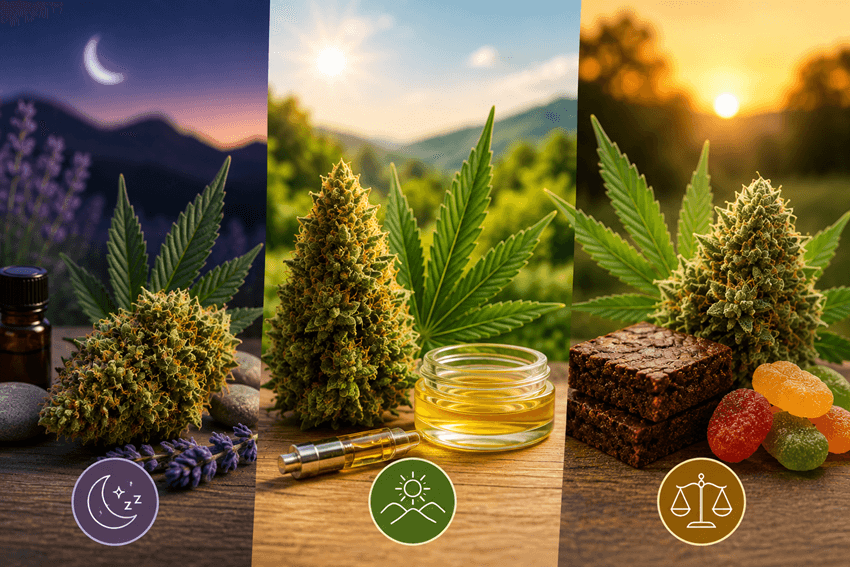
Indica, sativa, and hybrid are three common ways cannabis products are described. Traditionally, indica is associated with relaxing, body-focused effects, while sativa is linked with more uplifting or cerebral effects. Hybrids combine genetics from different cannabis varieties and can vary widely in their characteristics.
However, these labels do not always predict how a cannabis product will affect you. Cannabinoids, terpenes, potency, consumption method, genetics, and individual response can all influence the experience. Looking beyond the strain category can therefore give you a better understanding of a specific product.
In Mt. Pleasant, these categories can help you understand the terminology used when comparing cannabis products. Keep reading to learn how indica, sativa, and hybrid differ, what influences their effects, and what to consider beyond the label.
What Do Indica, Sativa, and Hybrid Mean?
Indica, sativa, and hybrid are common categories used to describe cannabis. The terms originally related more closely to plant characteristics and geographic origins than to the effects people experience. Over time, however, cannabis breeding and consumer culture connected these categories with different effect profiles.
Traditionally, indica plants were associated with shorter, broader growth patterns, while sativa plants were associated with taller growth and narrower leaves. Hybrid varieties combine genetics from different cannabis lines and can show characteristics from both.
Indica-dominant
Indica-dominant products are traditionally associated with relaxing, calming, and body-focused effects. Some consumers prefer them during the evening or when they want to unwind. However, these associations do not guarantee how a particular product will affect you.
A cross-sectional survey of 179 cannabis users found that participants preferred using indica more often in the evening. Among the 100 participants who had used both types, 85% reported feeling relaxed after using indica compared with 28% after using sativa. Seventy-two percent reported feeling sleepy or tired after indica compared with 13% after sativa.
These findings describe self-reported experiences, not proof that the indica label itself causes those effects. The study authors also noted that controlled research is needed to better understand the differences between products labeled indica and sativa.
Sativa-dominant
Sativa-dominant products are traditionally associated with uplifting, cerebral, and energizing effects. Some consumers prefer them during the daytime or for social and creative activities. However, these descriptions are general associations rather than reliable predictions for every product.
The same survey found that participants preferred using sativa more often during the morning and afternoon. Among participants who had used both types, 54% reported feeling energized after using sativa compared with 3% after indica. Sativa was also more commonly associated with feeling alert, focused, and motivated in the survey.
These results reflect participants' reported experiences. They do not establish that sativa genetics alone produce these effects.
Sativa-dominant products are traditionally associated with uplifting, cerebral, and energizing effects. Some consumers prefer them during the daytime or for social and creative activities. However, these descriptions are general associations rather than reliable predictions for every product.
The same survey found that participants preferred using sativa more often during the morning and afternoon. Among participants who had used both types, 54% reported feeling energized after using sativa compared with 3% after indica. Sativa was also more commonly associated with feeling alert, focused, and motivated in the survey.
These results reflect participants' reported experiences. They do not establish that sativa genetics alone produce these effects.
Hybrids
Hybrid products combine genetics from different cannabis varieties. Some are described as indica-dominant, while others are described as sativa-dominant or balanced. Because their genetics and chemical profiles can vary, hybrids can have a wide range of characteristics and reported effects.
A hybrid label does not necessarily mean that a product will produce an equal mix of indica- and sativa-associated effects. The specific cultivar, cannabinoid content, terpene profile, and potency can all differ between products.
Hybrid products combine genetics from different cannabis varieties. Some are described as indica-dominant, while others are described as sativa-dominant or balanced. Because their genetics and chemical profiles can vary, hybrids can have a wide range of characteristics and reported effects.
A hybrid label does not necessarily mean that a product will produce an equal mix of indica- and sativa-associated effects. The specific cultivar, cannabinoid content, terpene profile, and potency can all differ between products.
The Science Behind the Effects: Beyond Simple Labels
The indica and sativa categories can be useful for understanding common cannabis terminology, but research shows that they have important limitations. A large PLOS ONE study analyzed 89,923 commercial cannabis samples from six U.S. states. The researchers found that the labels Indica, Hybrid, and Sativa did not consistently align with distinct chemical profiles, and products carrying different labels often had overlapping terpene compositions.
These findings do not mean the labels have no value. They show that the category alone cannot fully describe a cannabis product. Looking at cannabinoids, terpenes, potency, and other product information can provide additional context.
The indica and sativa categories can be useful for understanding common cannabis terminology, but research shows that they have important limitations. A large PLOS ONE study analyzed 89,923 commercial cannabis samples from six U.S. states. The researchers found that the labels Indica, Hybrid, and Sativa did not consistently align with distinct chemical profiles, and products carrying different labels often had overlapping terpene compositions.
These findings do not mean the labels have no value. They show that the category alone cannot fully describe a cannabis product. Looking at cannabinoids, terpenes, potency, and other product information can provide additional context.
Cannabinoids
Cannabinoids are chemical compounds found in cannabis. THC is the primary cannabinoid responsible for cannabis's intoxicating effects, while CBD does not produce the same intoxicating effects as THC. Cannabis can also contain smaller amounts of other cannabinoids that contribute to its overall chemical profile.
THC percentage can provide useful information about potency, but it does not describe the entire product. CBD content and other cannabinoids can vary as well. The cannabinoid profile can therefore provide additional context when comparing cannabis products.
Terpenes
Cannabinoids are chemical compounds found in cannabis. THC is the primary cannabinoid responsible for cannabis's intoxicating effects, while CBD does not produce the same intoxicating effects as THC. Cannabis can also contain smaller amounts of other cannabinoids that contribute to its overall chemical profile.
THC percentage can provide useful information about potency, but it does not describe the entire product. CBD content and other cannabinoids can vary as well. The cannabinoid profile can therefore provide additional context when comparing cannabis products.
Terpenes are aromatic compounds that contribute to the smell and flavor of cannabis. Common examples include myrcene, limonene, pinene, linalool, beta-caryophyllene, and terpinolene. Their concentrations can vary between cannabis varieties and can contribute to differences in aroma and chemical profile.
Terpenes may also interact with cannabinoids, but their specific contribution to cannabis effects is still being studied. The proposed “entourage effect” remains an area of ongoing research. For that reason, terpene information can provide useful context, but it should not be treated as a guarantee of a particular experien
Indica vs. Sativa vs. Hybrid at a Glance
Indica, sativa, and hybrid labels can provide a quick way to compare cannabis products, but they offer only a general starting point. Traditional differences in plant structure, geographic origins, and genetics help explain how these categories developed, while modern breeding has made the distinctions less clear. Research published in PhytoKeys also highlights how extensive breeding has shaped the characteristics of modern cannabis varieties. The table below summarizes the traditional differences between the three categories.
|
Factor |
Indica |
Sativa |
Hybrid |
|
Traditional characteristics |
Shorter plants with broader leaves |
Taller plants with narrower leaves |
Varies based on parent genetics |
|
Commonly associated effects |
Relaxing, calming, body-focused |
Uplifting, energizing, cerebral |
Can lean relaxing, uplifting, or balanced |
|
Commonly associated use |
Evening or nighttime |
Daytime |
Depends on the specific product |
|
Genetics |
Traditionally associated with indica lineage |
Traditionally associated with sativa lineage |
Combines genetics from different cannabis varieties |
|
Terpene profile |
Varies by cultivar |
Varies by cultivar |
Varies by cultivar |
|
Label reliability |
General guide, not a guarantee |
General guide, not a guarantee |
General guide, not a guarantee |
These categories provide a useful framework for understanding common cannabis terminology. However, the characteristics and effects associated with each category can vary between products and individuals. The information on a specific product can therefore provide additional context when comparing cannabis options.
How to Choose the Right Type of Cannabis
Neither indica nor sativa is universally better. The more useful comparison depends on the product's characteristics and the type of experience you prefer. Indica, sativa, and hybrid labels can provide a starting point, but cannabinoid profile, terpene information, potency, and product format can provide additional context.
For Relaxation, Evening Use, or Sleep
Indica-dominant products are traditionally associated with relaxing and calming effects. Some consumers also prefer them during the evening, although the label alone cannot predict how a product will affect you. If you are comparing products for this type of experience, consider the full cannabinoid and terpene profile rather than choosing based only on the category.
For Daytime Energy, Focus, or Creativity
Sativa-dominant products are traditionally associated with uplifting and energizing effects. Some consumers prefer them during the daytime or for social and creative activities. However, cannabinoid and terpene profiles vary between products, so a sativa label alone cannot predict how a specific product will feel.
For Balanced or Versatile Effects
Hybrid products can vary widely because they contain genetics from different cannabis varieties. Some are described as indica-dominant, others as sativa-dominant, and some as balanced. Rather than assuming every hybrid will produce a middle-ground experience, check the specific product's cannabinoid and terpene information.
Consider the Product Label
Michigan's licensed cannabis market requires compliance testing, and product information can help consumers compare products. Depending on the product, labels may include information such as THC and CBD content, ingredients, net weight or volume, and other required details.
A Certificate of Analysis (COA), when available, can provide additional laboratory information about a tested product. Michigan's regulatory system also allows COAs to be uploaded to its statewide tracking system for transparency.
Practical Tips for Choosing Cannabis in Mt. Pleasant
Practical Tips for Choosing
Cannabis
Smart choices start with understanding the product. Here are practical tips for comparing cannabis products and making informed decisions.
Talk With a Budtender
A budtender can explain the information listed on a product and help you understand differences between available options. Instead of asking only for an “indica” or “sativa,” ask about THC, CBD, terpene profiles, product format, and other product characteristics.
Start Low and Go Slow
If you are new to cannabis or trying a product with unfamiliar potency, start with a small amount and give it time to take effect. This is especially important with edibles because they can take longer to produce noticeable effects than inhaled cannabis.
Consider the Product Format
The product format can affect how quickly cannabis takes effect and how long the experience lasts. Inhaled cannabis generally produces effects sooner than edible products, while edibles can take longer to produce noticeable effects.
Note Your Experiences
If you regularly compare different cannabis products, keep track of the product name, cannabinoid content, terpene information, amount used, and your experience. Over time, these notes can help you identify which product characteristics you personally prefer.
Understand Michigan Cannabis Rules
Michigan allows adult-use marijuana for adults 21 and older. The state's Cannabis Regulatory Agency regulates adult-use marijuana establishments and licensees. Michigan law also prohibits operating a vehicle while under the influence of marijuana.
Why the Same Strain Can Feel Different
A strain name does not always mean that every product will have the same characteristics. Different trusted brands can offer products with different cannabinoid content, terpene profiles, potency, and other characteristics, even when they share the same strain name. Growing conditions, cultivation practices, and processing can also contribute to differences between products.
Individual response adds another layer. Tolerance, amount used, consumption method, and personal sensitivity can all influence the experience. This means that a product you have tried before may not feel exactly the same in another form or batch.
For this reason, it can be useful to look beyond the strain name when comparing cannabis products. The specific product information can give you a clearer picture of what you are considering, especially when comparing products with similar indica, sativa, or hybrid labels.
The Bottom Line: Choose Cannabis Based on More Than the Label
Indica, sativa, and hybrid labels can help explain how cannabis products are commonly categorized, but they are only one part of the picture. Cannabinoid content, terpene profile, potency, genetics, and product format can provide additional context when comparing products. Individual responses can also vary, even when two products share the same category or strain name.
If you're comparing cannabis products in Mt. Pleasant, look at the information available for the specific product rather than relying on the strain category alone. Compare the full product profile, ask questions when needed, and connect with a local cannabis professional from URB Cannabis, one of the trusted local dispensaries in Mt. Pleasant, for help understanding product information.
Frequently Asked Questions (FAQs)
Can Two Cannabis Products With the Same Strain Name Have Different Effects?
Yes. Products with the same strain name can have different cannabinoid and terpene profiles. Growing conditions, cultivation practices, processing, batch differences, and individual response can all contribute to variation.
Does a Higher THC Percentage Mean Stronger Effects?
A higher THC percentage generally indicates greater THC potency, but it does not guarantee a specific overall experience. Product format, amount consumed, tolerance, and other cannabinoids and compounds can also affect the experience.
Can Terpenes Change the Way Cannabis Smells and Tastes?
Yes. Terpenes contribute to the aroma and flavor of cannabis. Different terpene concentrations can help explain why two products can have noticeably different scents and tastes.
Does the Product Type Affect How Quickly Cannabis Takes Effect?
Yes. Inhaled cannabis generally produces noticeable effects sooner than edible cannabis. Edibles typically take longer to produce effects, so the product format is an important factor when comparing options.
Are Indica, Sativa, and Hybrid Labels Used on Michigan Cannabis Products?
Yes. These categories remain common terms in the cannabis market, including in Michigan. However, the labels do not necessarily reflect distinct chemical profiles, so they are best considered alongside other product information.
What Information Can I Find on a Michigan Cannabis Product Label?
Depending on the product, labels can include information such as THC and CBD content, ingredients, net weight or volume, and other required product information. Michigan's licensed cannabis market also requires compliance testing.
What Is the Difference Between Indica and Sativa?
Indica and sativa are traditional cannabis categories associated with different plant characteristics and geographic origins. Indica is commonly associated with relaxing, body-focused effects, while sativa is often associated with more uplifting or cerebral effects. However, these labels do not reliably predict the effects of every cannabis product.
References:
-
Aizpurua-Olaizola, O., Soydaner, U., Öztürk, E., Schibano, D., Simsir, Y., Usobiaga, A., & Etxebarria, N. (2016). Evolution of the cannabinoid and terpene content during the growth of Cannabis sativa plants from different chemotypes. Journal of Natural Products, 79(2), 324–331. https://doi.org/10.1021/acs.jnatprod.5b00949
-
Booth, J. K., & Bohlmann, J. (2019). Terpenes in Cannabis sativa—From plant genome to humans. Plant Journal, 101(3), 506–516. https://doi.org/10.1111/tpj.14567
-
McPartland, J. M., & Small, E. (2020). A classification of endangered high-THC cannabis (Cannabis sativa subsp. indica) domesticates and their wild relatives. PhytoKeys, 144, 81–112. https://doi.org/10.3897/phytokeys.144.46700
-
Schwabe, A. L., Johnson, V., Harrelson, J., & McGlaughlin, M. E. (2023). Uncomfortably high: Testing reveals inflated THC potency on retail Cannabis labels. PLOS ONE, 18(4), e0282396. https://doi.org/10.1371/journal.pone.0282396
-
Smith, C. J., Vergara, D., Keegan, B., & Jikomes, N. (2022). The phytochemical diversity of commercial Cannabis in the United States. PLOS ONE, 17(5), e0267498. https://doi.org/10.1371/journal.pone.0267498
-
Stella, N. (2023). THC and CBD: Similarities and differences between siblings. Cannabis and Cannabinoid Research, 8(1), 1–11. https://doi.org/10.1089/can.2022.0090
-
U.S. Food and Drug Administration. (n.d.). FDA regulation of cannabis and cannabis-derived products, including cannabidiol (CBD). https://www.fda.gov/news-events/public-health-focus/fda-regulation-cannabis-and-cannabis-derived-products-including-cannabidiol-cbd
-
Cannabis Regulatory Agency. (n.d.). Michigan Regulation and Taxation of Marihuana Act. State of Michigan. https://www.michigan.gov/cra/sections/adult-use/michigan-regulation-and-taxation-of-marihuana-act
-
Cannabis Regulatory Agency. (n.d.). Scientific section. State of Michigan. https://www.michigan.gov/cra/sections/enforcement-division/scientific-section
-
Cannabis Regulatory Agency. (n.d.). Consumer connection: Adult-use marijuana in Michigan. State of Michigan. https://www.michigan.gov/cra/resources/consumer-connection