Blogs
The Hidden Variables That Make Cannabis Products Different

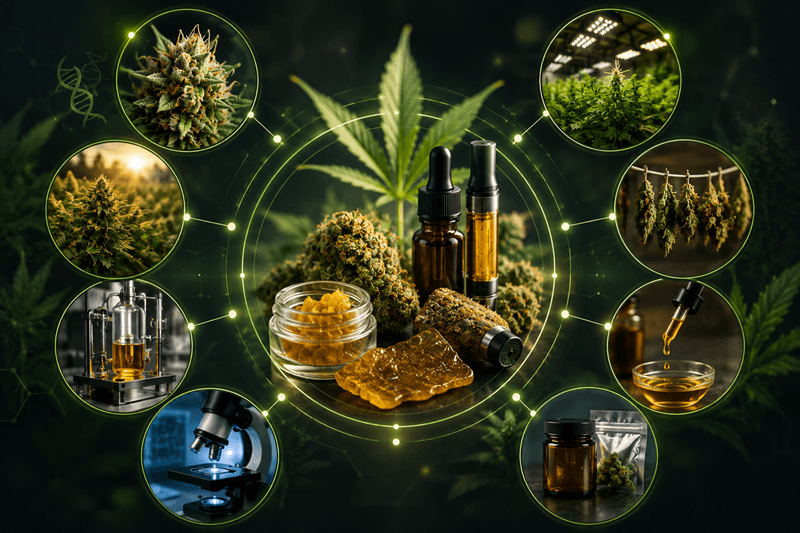
Why can two cannabis products made from the same strain produce noticeably different characteristics? The answer extends far beyond THC percentage. Genetics establish the plant’s chemical potential, while growing conditions, harvest timing, drying, and curing influence how that potential develops. Extraction methods can further change cannabinoid and terpene profiles, while formulation affects how compounds are delivered. Laboratory testing reveals measurable differences between batches, and storage conditions can influence freshness and stability over time. Understanding these hidden variables provides a more accurate way to evaluate cannabis products—by looking at the entire production pathway rather than relying on strain names, appearance, or a single potency number.
What Actually Makes Cannabis Products Different?
1. Genetics
Genetics establish the plant’s potential cannabinoid and terpene profile. Two plants described by the same strain name may still express different chemical characteristics because genetics can vary between cultivars, phenotypes, and breeding lines.
2. Growing Conditions
Light, temperature, humidity, nutrients, soil or growing medium, and irrigation can influence how a cannabis plant develops. These environmental variables affect plant growth and can contribute to differences in cannabinoid and terpene production.
3. Harvest Timing
When cannabis is harvested can influence its chemical profile. Cannabinoid development and terpene expression change throughout plant maturation, making harvest timing an important variable in the characteristics of the finished material.
4. Drying and Curing
Post-harvest handling can significantly influence aroma, texture, and chemical stability. Drying removes moisture under controlled conditions, while curing allows the material to equilibrate gradually. Poorly controlled conditions can alter the final product’s characteristics.
5. Extraction Method
For concentrates, extraction introduces another layer of variation. Solvent selection, temperature, pressure, processing time, and purification can affect which compounds are retained, removed, or concentrated. The result can be chemically different from the original flower.
6. Formulation
Cannabis products are often formulated with additional ingredients or delivery systems. Oils, edibles, cartridges, and other formats can differ in composition, concentration, consistency, and how cannabinoids are incorporated into the finished product.
7. Laboratory Testing
Testing provides measurable information about a product rather than relying only on appearance or marketing descriptions. Depending on the testing panel, laboratories can identify cannabinoids, terpene concentrations, contaminants, moisture, and other quality characteristics. Batch-to-batch variation can also become visible through testing.
8. Storage and Packaging
Light, oxygen, heat, moisture, and time can influence product stability. Packaging is therefore more than presentation; it can help protect the product from environmental exposure. Proper storage helps preserve characteristics established during cultivation and manufacturing.
Together, these variables explain why cannabis products should be viewed as complete chemical profiles rather than single potency numbers. From genetics to storage, every stage can contribute to the final product’s measurable characteristics.