Good cannabis flower is more than a high THC percentage or a frosty appearance. To evaluate cannabis flower quality, look at the overall condition of the product rather than relying on one feature. Factors such as appearance, aroma, texture, freshness, and product information can all help you assess what you're buying.
So, how can you tell if cannabis flower is high quality? A closer look can help you spot signs of well-maintained flower, while the label and available testing information can provide details you cannot determine by sight alone. Keep reading to learn what to look for when evaluating cannabis flower quality.
What Makes Cannabis Flower High Quality?
There is no single feature that proves cannabis flower is high quality. Instead, quality comes from several characteristics working together. Healthy-looking buds, intact trichomes, a distinct aroma, balanced moisture, proper curing, and reliable product information can all provide useful clues.
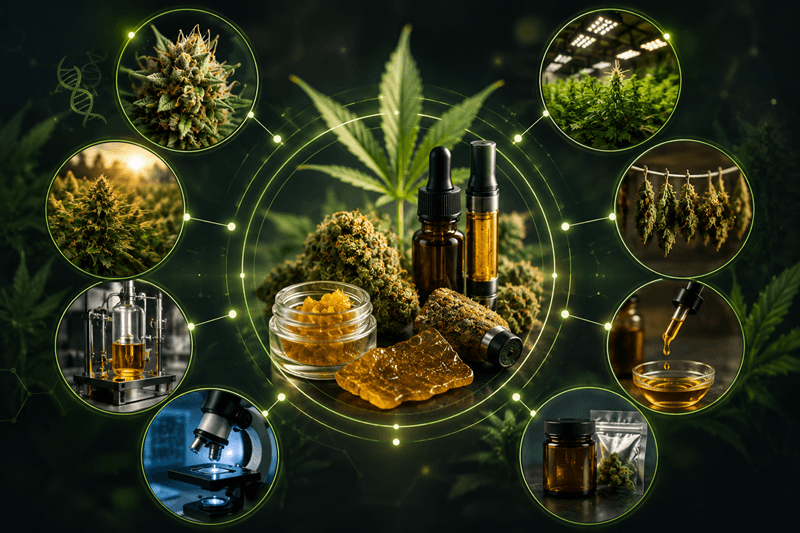
According to a review published in Bioengineering, post-harvest processes such as trimming, drying, curing, packaging, and storage can affect cannabis quality and cannabinoid content. The review also notes that drying conditions can influence the preservation of cannabinoids and terpenes.
It is also important to separate quality from potency. A flower with a high THC percentage is not automatically better than one with moderate THC. Likewise, a heavily frosted bud is not automatically superior if it has poor freshness, an unusual odor, or signs of improper handling. Trusted brands can provide another starting point when comparing products, but the flower should still be evaluated on its own characteristics. When evaluating cannabis flower quality, use these indicators as a complete check:
- Appearance: Look at color, structure, trim, and overall condition.
- Trichomes: Check for visible and intact resin glands.
- Aroma: Look for a distinct and recognizable scent.
- Texture: Check whether the flower feels appropriately dry and resilient.
- Freshness: Review available harvest and packaging information.
- Cannabinoids and terpenes: Use the label to understand the product profile.
- Testing: Check available COA and laboratory testing information.
Together, these cannabis flower quality indicators give you a clearer picture than any single number or visual feature.
Check the Appearance of the Flower
One of the easiest ways to evaluate cannabis flower quality is to inspect it closely. The buds should look healthy, well-developed, and intact rather than crushed or poorly handled. However, appearance should only be one part of your assessment. Color, structure, and trim can offer useful clues, but none of them can confirm quality on their own.
Look for Healthy Color
High-quality cannabis flower can come in many shades. Green is common, but some strains naturally show purple, blue, orange, or reddish tones. These differences can come from genetics and growing conditions, so color alone does not tell you how good a flower is.
Instead, look for signs that the flower appears healthy and well maintained. Extremely faded, brown, gray, or unusually discolored areas deserve closer attention. Also, do not assume that purple cannabis is automatically better. A colorful bud can still be old, poorly cured, or improperly stored.
|
|
|
|
|
Common in healthy cannabis flower
|
Purple or other color variations
|
May occur naturally due to genetics or growing conditions
|
|
|
Can provide a useful clue about handling and storage
|
|
|
May warrant a closer look at freshness and storage
|
Unusual brown or gray areas
|
May indicate deterioration or another quality concern
|
The goal is to look for natural, consistent color without obvious signs of deterioration. If the flower looks unusually dull or damaged, check its aroma, texture, and product information before making a decision.
Examine Bud Structure and Trim
Bud structure can provide another useful clue. Quality cannabis buds generally have a developed shape and should hold together without immediately falling apart. They should not consist mostly of stems, loose leaves, or crushed pieces.
Density can vary between strains, so dense buds are not automatically better than airy ones. Genetics and growing conditions can influence how tightly flower develops. Instead, look for buds that appear intact and appropriately formed for their variety.
Trim quality also matters when assessing cannabis flower appearance. Excessive leaves or large stems may indicate less careful post-harvest processing. On the other hand, flower that looks overly shaved or damaged may have lost some of its surface trichomes during trimming.
A good visual inspection should consider the whole bud, not one feature. Look at its color, structure, trim, and overall condition before moving on to the trichomes.
Look at the Trichomes
Trichomes are small resin-producing structures found on cannabis plants. On flower, they can look like tiny crystals or a layer of frost. Many appear as small stalks with rounded heads when viewed closely. These structures produce and store cannabinoids and terpenes that contribute to the flower's chemical and sensory profile.
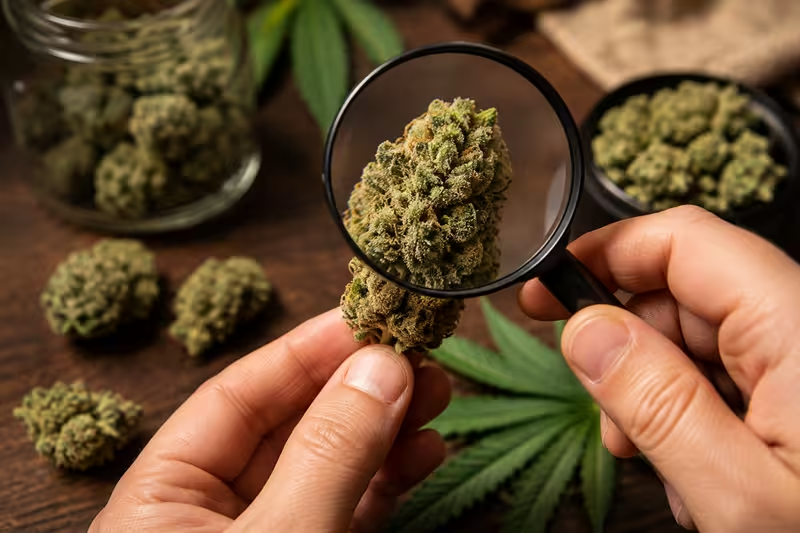
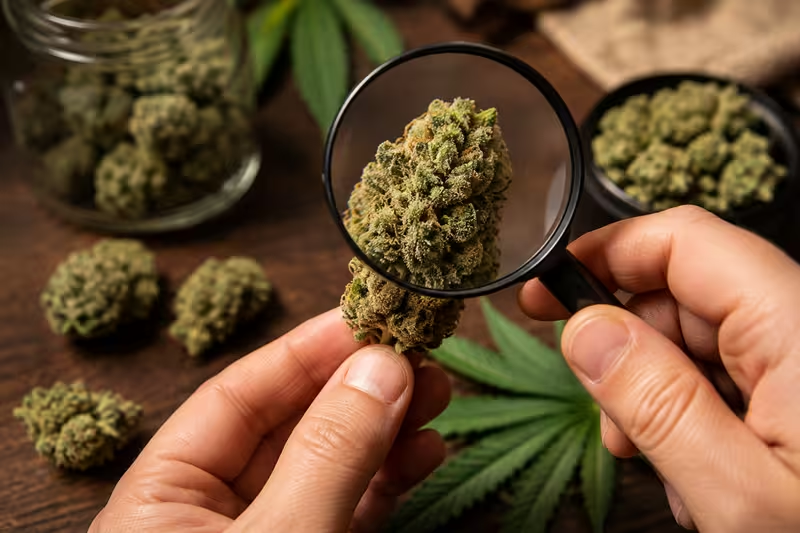
Because of this, visible trichomes are one useful indicator of cannabis flower quality. Look for noticeable, intact trichome coverage across the surface of the buds. A magnifying glass or close-up view can make them easier to inspect when the flower can be viewed closely.
You may see clear, cloudy, or amber-colored trichome heads. However, do not use trichome color alone to predict potency, quality, or effects. More visible trichomes do not automatically mean better flower. Instead, consider trichome coverage alongside freshness, aroma, texture, curing, and laboratory testing. A frosty bud can still be old or poorly stored, so use trichomes as one part of the overall evaluation.
|
|
|
|
|
Shows that resin glands are present
|
|
|
Can provide a useful clue about handling
|
|
|
Often reflects noticeable resin coverage
|
|
|
Consider alongside aroma, texture, and freshness
|
Damaged or rubbed surfaces
|
May indicate rough handling or processing
|
Evaluate the Aroma and Terpene Profile
Aroma is one of the quickest ways to assess cannabis flower quality. Fresh flower should have a noticeable and recognizable scent that fits its terpene profile. The aroma can also give you clues about freshness and how the flower was handled after harvest.
What Good Cannabis Flower Should Smell Like
Quality cannabis flower can have many different aromas. Depending on the flower, you may notice citrus, pine, fruit, earth, spice, floral notes, or fuel-like scents. There is no single “correct” cannabis aroma because different terpene profiles create different sensory characteristics.
A good aroma should be noticeable and characteristic rather than completely flat. You may notice specific notes when the container is opened, depending on the flower's terpene profile. However, aroma strength alone does not prove that flowers are more potent or higher quality.
Terpenes are responsible for much of cannabis's characteristic aroma and flavor. Common examples include limonene, myrcene, pinene, and beta-caryophyllene. Looking at the listed terpene profile can add useful context when comparing flowers with similar appearance or THC content.
Watch for Flat or Unusual Smells
Unusual smells can be a warning sign when evaluating flower. A hay-like, stale, musty, or mildew-like smell may indicate that the flower is old, poorly handled, or has a potential contamination issue. These odors should not be confused with the natural earthy or herbal aromas that some cannabis varieties produce.
Flower with very little aroma may also have lost some of its freshness or volatile compounds during storage. Still, smell should be considered alongside appearance, texture, dates, and testing information. One sensory characteristic alone cannot establish the overall quality of a product.
|
|
|
|
|
Can occur with different terpene profiles
|
|
|
May be associated with terpenes such as pinene
|
|
|
Can occur naturally depending on the flower
|
|
|
Can provide clues about the flower's terpene profile
|
|
|
May indicate reduced freshness or poor handling
|
|
|
A potential warning sign that deserves further inspection
|
Why Terpenes Matter
Terpenes are aromatic compounds found in cannabis and many other plants. In cannabis flower, they contribute to aroma and flavor and help distinguish one flower from another. This makes terpene information useful when evaluating quality beyond THC percentage.
A terpene profile can also help explain why two flowers with similar cannabinoid content smell very different. For example, one may have more citrus notes while another may have a more earthy or spicy character. When available, reviewing the terpene content alongside the flower's aroma gives you a more complete picture of its characteristics.
However, avoid treating a higher terpene percentage as an automatic quality guarantee. The overall condition of the flower still matters, including its freshness, cure, texture, trichome coverage, and testing results.
🌿
Check the Texture,
Moisture, and Cure
Simple physical clues can help identify potential
freshness, storage, and moisture concerns in cannabis flower.
The Goal
Flower should maintain its structure when handled gently —
not too brittle, not too wet, but balanced.
Why Texture Matters
Texture provides useful clues about how cannabis flower was
dried, cured, and stored. Quality flower should not feel
extremely brittle or noticeably wet. A balanced texture can
help identify potential freshness or storage concerns before
making a decision.
-
Feels dry without being extremely brittle.
-
May have natural tackiness from resin.
-
Maintains its structure when handled gently.
-
Holds its shape without feeling damp or soggy.
-
Has some resilience instead of immediately falling apart.
!
Signs Flower
May Be Too Dry
-
Feels brittle and breaks apart too easily.
-
Crumbles into small pieces with very little pressure.
-
Does not maintain its structure when handled.
-
May have a weaker or flatter aroma compared with fresher flower.
-
Can indicate moisture loss during drying or storage.
!
Signs Flower
May Be Too Moist
-
Feels wet, soggy, or unusually spongy.
-
Excess moisture can affect storage stability.
-
Excess moisture can create conditions that support microbial growth.
-
Damp flower may have a musty or unusual smell.
Michigan Testing Data
Michigan cannabis testing guidance includes water activity
testing for marijuana products. A maximum water activity
of 0.65 is required for a marijuana sample
to pass that test.
🛡️
Safety First
If flower feels damp, has a musty smell, or shows visible
signs of mold or other contamination, do not use it.
Texture alone should not be used to determine safety.
Review available testing information and inspect for
visible contamination where permitted.
Key Takeaway
Balanced texture is the goal.
Look for flower that is dry but not brittle, maintains its
structure when handled gently, and does not feel damp,
soggy, or unusually spongy. Texture can provide useful
clues, but testing information and visible inspection are
important parts of a broader quality check.
Quick Reference Guide
✓
Balanced
Dry but not brittle. Maintains structure.
⚠
Too Dry
Brittle, crumbly, and may have weaker aroma.
💧
Too Moist
Wet, soggy, spongy, or unusually damp.
🔎
Verify
Check testing information and visible contamination.
Check Freshness and Product Dates
Freshness can affect the aroma, texture, and overall condition of cannabis flower. Even well-grown flower can lose desirable characteristics over time when stored under unsuitable conditions. Checking available product dates gives you useful context, but the date should not be your only measure of freshness.
Review Harvest and Packaging Information
Look at the product label for available dates and batch information. Depending on the product and state requirements, you may see a harvest date, packaging date, batch number, lot number, or other identifying information. These details can help you understand when the flower was handled and connect it to its testing information.
A newer packaging date does not automatically mean better flower. Storage conditions also matter, and properly stored flower may retain its characteristics better than a newer product that experienced heat, light, or excess moisture. Use the date as one piece of information rather than a final quality score.
It is also useful to compare the product date with its current appearance and aroma. If the flower has a dated package but smells stale, feels excessively dry, or shows other quality concerns, the sensory signs deserve attention.
Consider How the Flower Was Stored
When evaluating flower, consider whether it appears to have been kept in suitable packaging and handled properly. A sealed package can help limit environmental exposure, but packaging alone does not guarantee quality.
For a more complete assessment, compare the product's current appearance, aroma, and texture with its available date and batch information. Then review the product label and available testing results.
Related reading: How to Store Cannabis Edibles Safely.
Look Beyond THC Percentage
THC percentage is useful for understanding reported potency, but it is only one part of the product profile. The label may also provide information about other cannabinoids and terpenes. Looking at these details together can help you compare flowers with similar THC levels but different characteristics.
Understand Cannabinoid Content
Cannabis flower contains multiple cannabinoids, including THC and CBD. Product labels can show the reported amounts of these cannabinoids and help you compare products based on their cannabinoid profiles.
These numbers describe the product's reported cannabinoid content. They do not, by themselves, establish the flower's overall quality. For that, you still need to consider its appearance, aroma, texture, freshness, and available testing information.
|
|
|
|
|
|
|
|
|
|
|
Additional information about the cannabinoid profile
|
Total cannabinoid content
|
A broader view of the reported cannabinoid profile
|
Price can be another factor when comparing products, but it should be considered alongside the flower's overall quality and product information. Current cannabis deals from URB may also provide useful context when comparing available options.
Compare Cannabinoids with Terpene Information
Terpene information adds useful context to the cannabinoid numbers on a label. Two flowers may have similar THC content while having different terpene profiles and aromas. Looking at both can help you understand the characteristics of each product more clearly.
For example, one flower may have prominent citrus notes while another has a more earthy or spicy aroma. The terpene profile can help explain some of these differences, while the cannabinoid profile provides separate information about the product's reported cannabinoids.
Use the two profiles together rather than treating either one as a complete quality score. This gives you a more complete view of the flower before you consider its physical condition and testing information.
Check the Certificate of Analysis (COA)
A Certificate of Analysis (COA) gives you information that your eyes and nose cannot provide. According to the New Jersey Cannabis Regulatory Commission, a COA is a laboratory test report that provides information about the safety, quality, and potency of a cannabis product. It contains laboratory testing results that can provide information about a product's cannabinod and terpene content, along with applicable safety testing results.
A COA should complement your own inspection rather than replace it. Flower can still vary in freshness, aroma, texture, and appearance. Laboratory results provide another layer of information that you cannot establish through sight or smell alone.
When reviewing a COA, first confirm that the product and batch information match the flower you are evaluating. Then review the cannabinoid results, terpene information when available, and applicable safety testing results. This lets you compare laboratory information with what you observe in the flower itself.
|
|
|
Product or batch information
|
Make sure it matches the product you are evaluating
|
THC and other cannabinoids
|
Review the reported cannabinoid content
|
|
|
Check the reported terpene profile when available
|
|
|
Look for applicable microbial testing results
|
|
|
Review applicable pesticide or chemical residue results
|
|
|
Check applicable heavy-metal testing
|
|
|
Review applicable moisture-related testing
|
|
|
Confirm the product meets applicable requirements
|
Third-party testing provides information that consumers cannot determine through appearance or smell alone. Still, a passing COA does not automatically mean the flower will have the aroma, texture, or freshness you prefer. For a more complete evaluation, combine laboratory results with appearance, aroma, texture, freshness, and product information.
What are the Red Flags of Low-Quality Cannabis Flower
Knowing what to avoid is just as important as knowing what quality flower should look like. Some warning signs are easy to spot, while others become clearer when you combine appearance, aroma, and texture. If several red flags appear at once, consider choosing a different product.
Visual Red Flags
Some visual problems are easy to spot and deserve attention. Watch for fuzzy or powdery growth, webbing, insects, foreign material, or severe deterioration. These signs should not be confused with the natural appearance of trichomes.
Also pay attention to flower that looks unusually brown, gray, faded, or heavily damaged. Large amounts of stems, excess leaf material, or crushed buds can also suggest rough handling or less careful post-harvest processing.
Aroma and Texture Red Flags
Aroma can reveal problems that are not always obvious visually. A musty or mildew-like smell deserves attention, while a stale or hay-like aroma may suggest reduced freshness or poor handling.
Texture provides another useful clue. Flower that is extremely dry and crumbly may have lost too much moisture, while flower that feels wet or unusually spongy may have excess moisture. When several warning signs appear together, take them seriously rather than relying on one characteristic.
|
|
Why It Deserves Attention
|
|
|
May indicate mold or another contamination issue
|
|
|
May indicate pest contamination
|
Musty or mildew-like smell
|
Can be a warning sign of contamination
|
|
|
May indicate reduced freshness or poor handling
|
Extremely dry, crumbly texture
|
May indicate excessive moisture loss
|
Wet or unusually spongy texture
|
May indicate excess moisture
|
Excessive stems or leaf material
|
May indicate poor trimming or handling
|
|
|
May indicate deterioration or another quality concern
|
Testing and Label Red Flags
The product label and available testing information can provide another layer of quality assurance. Check that the product information is clear and that the batch or lot details correspond with the available Certificate of Analysis when one is provided.
Also review the applicable testing results rather than relying only on marketing language. Terms such as “premium” or a high THC percentage do not replace laboratory results or your own inspection.
If several warning signs appear together, do not overlook them because of a high THC percentage or an appealing label. A complete evaluation should consider the product as a whole.
Does Higher THC Mean Better Cannabis Flower?
No. A higher THC percentage does not automatically mean higher-quality cannabis flower. THC content tells you about reported potency, but it does not measure freshness, aroma, texture, trichome coverage, or overall condition.
Two flowers can have similar THC levels and still differ in important ways. One may have a fresher aroma and better-maintained texture, while another may be overly dry or poorly stored. That is why THC vs. quality should not be treated as a simple numbers game.
|
|
|
|
|
|
|
|
Reported cannabinoid content
|
|
|
Aroma and flavor characteristics
|
|
|
Visible resin development
|
|
|
Clues about freshness and terpene expression
|
|
|
Clues about moisture balance and handling
|
|
|
Laboratory testing and product information
|
Use THC percentage to understand potency, not as a stand-alone quality score. A better assessment considers the full product profile and the available laboratory information.
The Bottom Line: Look, Smell, Feel, and Verify
The best way to evaluate cannabis flower is to look for consistency. The flower should not raise obvious concerns when you inspect its appearance, aroma, texture, product information, and testing results.
Do not let one number or feature make the decision for you. A high THC percentage or frosty appearance can be appealing, but neither one proves that the flower is fresh or well maintained.
Frequently Asked Questions (FAQs)
What makes cannabis flower high quality?
High-quality flower is evaluated through several characteristics rather than one feature. Appearance, aroma, texture, freshness, cannabinoid and terpene information, and applicable testing can all provide useful clues.
What should high-quality cannabis flower look like?
It should appear healthy and well maintained, without obvious mold, pests, foreign material, or severe deterioration. Color and bud density can vary naturally between varieties.
What should good cannabis flower smell like?
Good flower can have many natural aromas, including citrus, pine, fruit, earth, spice, and floral notes. A musty or mildew-like odor is a warning sign.
How should quality cannabis flower feel?
Quality flower should not feel wet or extremely brittle. It can have some natural resin-related tackiness while still maintaining its structure.
Do more trichomes mean better cannabis?
Not necessarily. Visible trichomes are one quality indicator, but they should be considered alongside freshness, aroma, texture, and testing information.
Does higher THC mean better-quality cannabis?
No. THC percentage indicates reported potency, not overall flower quality. Other characteristics can be just as important when evaluating the product.
How important are terpenes when evaluating cannabis flower?
Terpenes help shape cannabis aroma and flavor and can help distinguish one flower from another. The terpene profile is useful information, but it should not be treated as a stand-alone quality score.
How can you tell if cannabis flower is fresh?
Check available harvest or packaging information, then compare it with the flower's current appearance, aroma, and texture. Storage conditions can also affect freshness.
What are the signs of low-quality or contaminated cannabis flower?
Warning signs include fuzzy or powdery growth, pests, webbing, foreign material, musty odors, severe deterioration, and unusual moisture. If flower appears contaminated, do not use it.
-
Reason, D. A., Grainger, M. N. C., & Lane, J. R. (2022). Optimal storage conditions of commercial cannabis crops. Industrial & Engineering Chemistry Research, 61(39), 14691–14701. https://doi.org/10.1021/acs.iecr.2c02071